
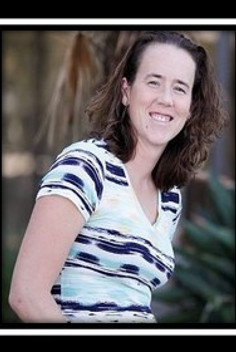
About Angela Beyer
She spent years studying how the brain learns — then walked into classrooms where none of it was being used.
That gap didn't just frustrate Angela Beyer. It became her life's work. The Neuroeducation System and The Brain Bridge are the result — practical tools built to close the distance between brain science and the people who need it most.
Angela Beyer
Neuroeducator · Department Head · Author
MS Education · Graduate Certificate, Mind Brain & Teaching, Johns Hopkins
🎓
MS Education
Concordia University
📅
25+ Years
Working directly with children, educators, and school communities
🧠
Graduate Certificate
Mind, Brain & Teaching
Johns Hopkins University
🔬
AA Early Childhood Education
BS Neuroscience
BS Psychology
BS Biology
Carthage College
The story behind the work
The research existed. The tools existed. The bridge between them didn't.
Most educators come to neuroeducation through the classroom. Angela came to it from both directions at once.
While earning her degrees in Neuroscience, Biology and Psychology, she kept encountering research that should have been transforming classrooms — and wasn't. Then she became a teacher herself, and the pattern she'd seen in lecture halls played out in real time: children struggling in ways that were entirely explainable by science, and educators doing their best without access to any of it.
"It wasn't one moment. It was the accumulation of the same gap appearing everywhere I worked — in college classrooms, in Head Start programs, in elementary schools."
The research existed. The tools existed. The bridge between them didn't. That's what the Neuroeducation System is — and why The Brain Bridge was built to take that understanding directly into schools and homes, one week at a time, all year long.
Career & experience
25+ years working across every level of education.
Elementary Classroom Teacher
Students with Emotional Needs
Teaching in the classroom where the gap between brain research and daily practice was most visible — and most costly for the children in front of her.
Department Head, Education & Early Childhood Education
San Joaquin Delta College
Currently leading the Education and Early Childhood Education department — training the next generation of educators with the neuroeducation foundation she spent a career wishing she'd had from the beginning.
Director, Multi-Site Program
Early Childhood Education
Mentoring and training early childhood educators across multiple sites — where she saw the same gap playing out at scale, with families who deserved better tools than they were being given.
Neuroeducation Specialist
Neuroeducation Connection
Creator of the Neuroeducation System — Framework Guide, Implementation Guide, Professional Workbook, and Family Workbook — and The Brain Bridge 37-week school program.
The philosophy behind the work
Understanding how the brain learns isn't just interesting. It's the missing foundation of effective teaching.
Angela's work is grounded in one core belief: when educators understand the why behind how children learn, everything changes — not just what they teach, but how they respond to behavior, how they design their environments, and how they support the kids who don't fit a one-size-fits-all system.
Research-backed, not research-buried
Every concept in the Neuroeducation System is grounded in neuroscience, psychology, and child development research — translated into language that doesn't require a PhD to understand or use.
Immediately applicable
This isn't theory. Whether you're a pre-K teacher, a K-12 classroom educator, a school administrator, or a college professor — the tools work in the real conditions you're actually in.
Built to bridge school and home
The most powerful shift happens when the adults at school and the adults at home are working from the same understanding. That's not a communication strategy. It's a neurological one.
Who Angela works with
Educators and families across every grade, setting, and role.
Angela has worked with classroom teachers, school counselors, district leaders, Head Start educators, families, and college faculty across a wide range of grades, settings, and roles.
Her presentations are known for combining storytelling and humor with substantive neuroeducational content — the kind participants can actually use the next day. Not just inspired by. Use.
-
Classroom teachers (Pre-K–12)
-
School counselors
-
District leaders
-
Head Start educators
-
College faculty
-
School administrators
-
Families & caregivers
-
Instructional coaches
-
Early childhood educators
-
Special education professionals
-
Educational support staff
-
Other child service professionals
What Angela created are the tools she wished existed — built for the people doing the work.
After 25 years of watching the same gap appear in every setting she worked in, Angela built the system she kept wishing someone else would build.